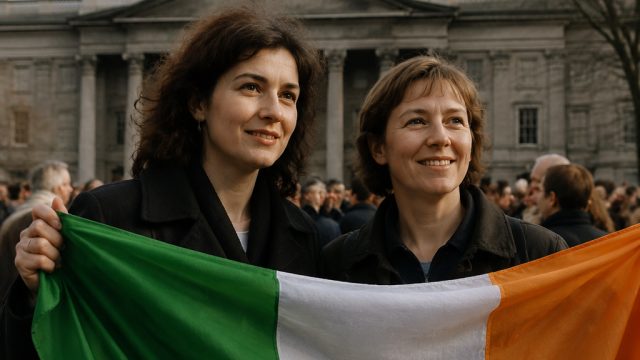
Ireland's Landmark Decision: A Step Toward Equality in 1993
On June 1, 1993, Ireland marked a pivotal moment in its history with the decriminalization of homosexuality. This significant change was the culmination of years of advocacy and social transformation. It not only reshaped the landscape of LGBTQ+ rights in Ireland but also highlighted a broader movement towards equality and acceptance.
The Fight for Decriminalization
Before this landmark decision, homosexuality was classified as a criminal offense under Irish law. This legal stance reflected societal attitudes that viewed same-sex relationships as taboo and immoral. Independent Senator David Norris emerged as a key figure in the fight for decriminalization, advocating tirelessly for the rights of LGBTQ+ individuals.
David Norris: A Catalyst for Change
Norris's journey began in the 1970s when he filed a case challenging the constitutionality of the laws criminalizing homosexuality. His relentless pursuit of justice saw him take his case to the European Court of Human Rights, where he argued that Ireland's laws violated fundamental human rights. Ultimately, his efforts bore fruit, leading to a re-evaluation of the legal framework surrounding homosexuality in Ireland.
The Impact of Decriminalization
The decriminalization of homosexuality in Ireland was not just a legal milestone but also a cultural shift. It paved the way for greater acceptance and visibility of LGBTQ+ individuals in society.
Social Acceptance and Representation
Post-1993, Ireland witnessed a gradual transformation in public attitudes toward the LGBTQ+ community. Media representation improved, and LGBTQ+ individuals began to take on more prominent roles in society, contributing to a richer and more diverse culture. Events such as Dublin Pride became significant celebrations of identity and community.
Legacy and Ongoing Challenges
Despite the progress made since 1993, challenges remain. Discrimination and prejudice still exist, and ongoing advocacy is crucial to ensure that LGBTQ+ rights are continually protected and expanded. Ireland's journey toward equality is ongoing, reminding us that legal changes must be accompanied by societal shifts.
Continued Advocacy and Support
Organizations such as GLEN (Gay and Lesbian Equality Network) and BeLonG To have played vital roles in supporting LGBTQ+ youth and advocating for more inclusive policies. Their work emphasizes the importance of fostering safe and supportive environments for all individuals, regardless of their sexual orientation.
Why This Matters Today
The decriminalization of homosexuality in Ireland is a reminder that the fight for equality is a continuous one. As countries around the world grapple with issues of discrimination and inequality, Ireland's story offers hope and inspiration. It underscores the importance of standing up for human rights and the need for legislative frameworks that protect all individuals.
Global Implications
As we observe the anniversary of this landmark decision, it is essential to recognize its global implications. Many countries still have outdated laws criminalizing homosexuality. Ireland's decriminalization serves as a beacon for activists worldwide, showing that change is possible through resilience and advocacy.
Conclusion
Ireland's decision to decriminalize homosexuality in 1993 was a watershed moment that changed the course of history for the LGBTQ+ community. While significant progress has been made, the journey toward full equality continues. The story of Ireland is not just about laws; it's about people, acceptance, and the ongoing struggle for justice. As we celebrate this milestone, let us also commit to ensuring that the rights of all individuals are respected and upheld, fostering a future where everyone can live authentically and free from discrimination.
